

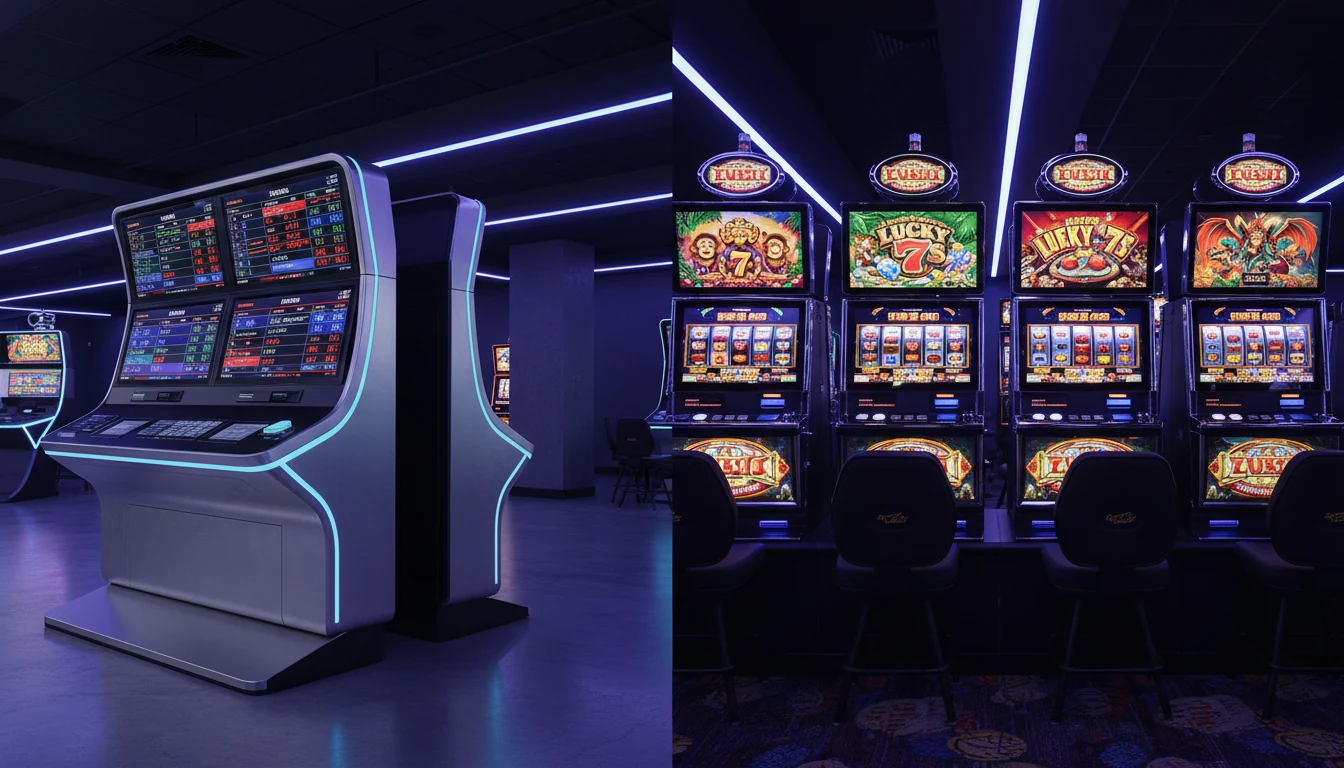
The gambling world loves its binary debates – Vegas vs online, NFL vs college, slots vs table games – but few arguments generate as much confusion as the casino sportsbook versus pure sportsbook comparison. On the surface, the distinction seems straightforward: integrated platforms offer both casino games and sports betting under one roof, while dedicated sportsbooks focus exclusively on sports wagering. Dig deeper, though, and you’ll find meaningful differences in odds quality, user experience, promotional structures, and overall value that should inform your platform choice.
This isn’t about declaring a universal winner. Your optimal platform depends entirely on how you actually gamble, not how the industry markets to you. Someone who bets exclusively on NFL games and never touches a slot machine has fundamentally different needs than someone who enjoys both activities equally. Understanding the genuine trade-offs between these platform types requires looking past the marketing and examining what each approach does well – and where each falls short.
The Specialization Advantage
Pure-play sportsbooks built their entire businesses around sports betting, and that singular focus shows in their products. Companies like bet365 refined their offerings over decades in European markets before entering the US, developing sophisticated trading operations, comprehensive market coverage, and interfaces optimized specifically for sports bettors. When your entire revenue depends on sports wagering, you invest heavily in making that experience exceptional.
This specialization manifests most clearly in odds quality. Dedicated sportsbooks typically maintain lower margins than their integrated competitors because sports betting represents their core business rather than one product among many. A sportsbook fighting for market share against other sportsbooks competes primarily on odds – they must offer competitive prices or watch sophisticated bettors migrate to sharper books. Research consistently shows that pure-play operators like bet365 and Pinnacle (where legal) offer some of the industry’s sharpest lines across major sports.
Market depth follows similar patterns. When engineers and product managers focus exclusively on sports betting, they build features sports bettors actually want. Same-game parlays with correlated legs, extensive alternative lines, deep prop markets for minor sports, and responsive live betting platforms all benefit from concentrated development resources. Pure-play sportsbooks often lead innovation in these areas because they’re not splitting attention between building better blackjack games and improving their betting interfaces.
The analytics and information tools available on dedicated platforms frequently surpass what integrated operators provide. Bet365 offers live streaming for thousands of events annually. FanDuel and DraftKings – which, despite having casino products, emerged from fantasy sports and maintain sports-first cultures – provide sophisticated statistics, injury tracking, and lineup information integrated directly into their betting interfaces. These features matter to serious sports bettors who want every informational advantage while wagering.
The Integration Appeal

Casino sportsbooks counter the specialization argument with convenience and unified economics that resonates strongly with recreational players. Managing a single account eliminates password fatigue and simplifies your financial life. One deposit works across every form of gambling the platform offers. One loyalty program accumulates rewards from all activity. One customer service team handles all issues. For players who genuinely enjoy multiple gambling verticals, this integration eliminates friction that would otherwise fragment their experience.
The shared wallet functionality deserves particular attention. On integrated platforms, your entire bankroll remains accessible regardless of whether you’re betting the Sunday NFL slate or playing blackjack on Tuesday night. There’s no transferring funds between separate accounts, no managing multiple balances, no risk of having money trapped in an account for a vertical you’re not currently using. This fluidity allows spontaneous transitions between activities – spinning a few slot games during halftime or placing a live bet while waiting for the next poker hand.
Cross-product promotions create value impossible to capture on specialized platforms. Integrated operators regularly offer promotions where sports betting activity earns casino rewards, or where casino play generates boosted odds or free bets for sports wagering. A platform might award free spins for every $100 wagered on sports, or provide profit boosts on parlays after certain slot achievements. These intertwined promotions effectively subsidize one vertical with profits from another, rewarding players who use both products.
The loyalty program economics often favor integrated platforms for players active across multiple verticals. Caesars Rewards and MGM Rewards accumulate points from every dollar wagered on sports, casino games, poker, and even physical casino visits. Players who split their gambling across these activities accumulate rewards faster than they would maintaining separate accounts on specialized platforms. For someone who both bets NFL games and visits Las Vegas twice yearly, the unified rewards structure offers genuine value unavailable elsewhere.
Odds Quality Reality Check
Let’s address the elephant in the room: do integrated casino sportsbooks actually offer worse odds than dedicated sportsbooks? The evidence suggests yes, but the magnitude varies considerably by operator and market.
Academic research and odds comparison services consistently find that European-focused pure-play sportsbooks maintain lower margins than their American-focused integrated competitors. The gap narrows on major markets – NFL spreads show less variation than, say, Champions League soccer – but it persists across most betting options. Operators know that sophisticated bettors shop for the best lines, while recreational players often bet wherever their account already exists.
However, this generalization oversimplifies the reality. DraftKings and FanDuel dominate the US market despite having casino products because they maintain aggressive odds on major American sports, where most of their volume concentrates. Their fantasy sports heritage created cultures focused on sports product quality, and they’ve invested heavily to offer competitive lines. BetMGM and Caesars, with their casino-first backgrounds, sometimes lag behind on odds but compete through promotions and loyalty programs instead.
The practical impact of odds differences depends on your betting volume. Someone placing $500 in wagers annually won’t notice whether they’re paying -108 or -112 on spreads – the mathematical difference amounts to a few dollars. But someone wagering $500 weekly will see those percentages compound into hundreds of dollars over a season. Volume bettors should absolutely prioritize odds quality; occasional recreational bettors might reasonably prioritize other factors.
Live betting represents another area where specialization often wins. The technology required to update odds instantly during games, manage risk across constantly changing markets, and provide reliable execution during high-traffic moments demands serious infrastructure investment. Pure-play sportsbooks with decades of live betting experience frequently offer more responsive in-play markets with greater depth than operators who added live betting as a feature rather than building their businesses around it.
Casino Quality Considerations
If you’re choosing an integrated platform partly for casino access, the quality of that casino matters. Not all integrated operators treat casino games as equals to their sportsbooks – some clearly prioritize one vertical while offering the other as a checkbox feature.
Game selection varies enormously across integrated platforms. The best operators offer thousands of slot titles from premium providers like NetEnt, Pragmatic Play, and IGT alongside comprehensive table game selections. Lesser platforms might advertise hundreds of games but stock primarily low-quality titles from unknown developers. Check which software providers power a platform’s casino before assuming game variety translates to game quality.
Live dealer options have become increasingly important differentiators. Evolution Gaming dominates this space, and platforms featuring their extensive live dealer catalog offer experiences approaching physical casino quality. High-quality streams, professional dealers, multiple camera angles, and reliable connections make the difference between live dealer games feeling like genuine casino experiences versus frustrating technical exercises. Some integrated platforms invest heavily in live dealer while others treat it as an afterthought.
Return-to-player percentages matter for anyone taking casino play seriously. Slots typically return between 90% and 98% of wagers over time, with that spread representing meaningful cost differences. An integrated platform might advertise hundreds of games but stock primarily lower-RTP options that generate more operator profit. The best casino sportsbooks prominently display RTP information and feature games known for player-friendly return rates.
Table game variety deserves attention beyond just blackjack and roulette availability. How many blackjack variants exist? What side bets are offered? Are there multiple roulette styles (American, European, French) with their different house edges? Can you find baccarat, craps, and specialty games? The depth of table game selection indicates how seriously a platform takes its casino product.
Promotional Structure Differences
The way integrated platforms and pure sportsbooks structure promotions reveals different competitive strategies and creates different value opportunities for players.
Welcome bonuses on integrated platforms often present choices: take a sports bonus, a casino bonus, or occasionally a hybrid offer covering both. This optionality benefits players who know which vertical they’ll use more, but the individual bonuses sometimes fall short of what dedicated operators offer. A casino-only platform might provide a more generous deposit match than the casino portion of an integrated platform’s welcome offer because that’s their only lever to attract customers.
Ongoing promotions diverge more significantly. Pure sportsbooks concentrate all promotional resources on sports betting – daily odds boosts, parlay insurance, profit enhancements, and second-chance bets flow consistently because that’s their only competitive arena. Integrated platforms split promotional budgets across verticals, which might mean fewer sports-specific offers but more total promotional value when considering both casino and sports opportunities.
The cross-product promotions unique to integrated platforms can provide substantial value if you actually use both products. Earning casino free spins from sports betting activity, receiving boosted sports odds for achieving casino milestones, or getting reload bonuses that apply across all gambling activities creates additional upside. But these cross-product promotions provide zero value if you only use one vertical – they’re essentially promotional budget allocated to something you’ll never claim.
Loyalty programs tell different stories too. Pure sportsbooks like bet365 operate tiered loyalty systems offering cashback, enhanced odds, and exclusive promotions scaled to betting volume. Integrated platforms like Caesars and BetMGM tie their programs to broader hospitality empires, offering hotel comps, dining credits, show tickets, and resort benefits alongside digital rewards. The optimal program depends on whether you value gambling-specific benefits or the broader lifestyle perks that casino-resort integration enables.
The User Experience Factor
Interface design differences between platform types reflect their core philosophies. Pure sportsbooks typically optimize every screen element for sports betting efficiency – finding games, comparing odds, building parlays, and tracking live action happen with minimal clicks and maximum speed. The entire interface assumes you’re there to bet on sports, and nothing distracts from that purpose.
Integrated platforms must accommodate multiple activities within unified interfaces, creating inherent design compromises. Switching between sports and casino sections adds navigation layers. The homepage must promote both verticals, potentially cluttering what could otherwise be streamlined sportsbook access. Some platforms handle this better than others – BetMGM’s tabbed interface works reasonably well, while others feel like two separate apps awkwardly merged.
Mobile app performance often favors focused applications. Dedicated sportsbook apps need only handle betting functionality, allowing developers to optimize performance for that specific purpose. Integrated apps must load casino games, maintain separate game engines, and switch between fundamentally different activity types, creating more opportunities for sluggishness or crashes. App store ratings frequently reflect these differences, with pure sportsbook apps averaging slightly higher scores.
That said, maintaining separate apps for separate activities creates its own friction. Checking your sports betting account on one app, then opening another app to play slots, then returning to the first app to catch live betting opportunities fragments attention and complicates session management. If you genuinely use both products regularly, app consolidation provides real convenience despite potential performance tradeoffs.
Follow winning casino game strategies.
Making Your Decision
The choice between casino sportsbook and pure sportsbook ultimately reflects your gambling identity. Ask yourself honest questions: When was the last time you played a casino game? Do you actually use both products, or do you just like having the option? How much do you bet annually, and would odds differences meaningfully impact your results?
For serious sports bettors who treat wagering as a skill-based activity, pure sportsbooks usually make more sense. The sharper odds, deeper markets, and superior live betting features directly support profitable betting approaches. The casino games you’d never use anyway represent unnecessary baggage, and the promotional resources diverted to casino marketing don’t benefit you.
For recreational players who enjoy the full spectrum of gambling activities, integrated platforms offer genuine value through unified accounts, cross-product promotions, and consolidated loyalty programs. The slight odds disadvantage matters less when your annual betting volume is modest, and the convenience of one-stop gambling access provides daily utility.
For players in the middle – maybe you primarily bet sports but occasionally enjoy a slot session – consider maintaining primary accounts on both platform types. Use the pure sportsbook for your core sports betting activity to capture better odds, while keeping an integrated platform account for casino entertainment and promotional diversification. This hybrid approach captures most advantages of both models while accepting the minor inconvenience of managing multiple accounts.
Whatever you choose, avoid letting marketing override honest self-assessment. The integrated platform advertising “over 1,000 casino games” provides zero value if you never play them. The pure sportsbook promoting “the industry’s sharpest odds” matters little if you bet $50 per month. Match the platform to your actual behavior, not the aspirational gambler you imagine becoming. The right platform is whichever one serves how you actually gamble – not how the industry wishes you would.
Control your tilting entirely with top casino sports book.
