

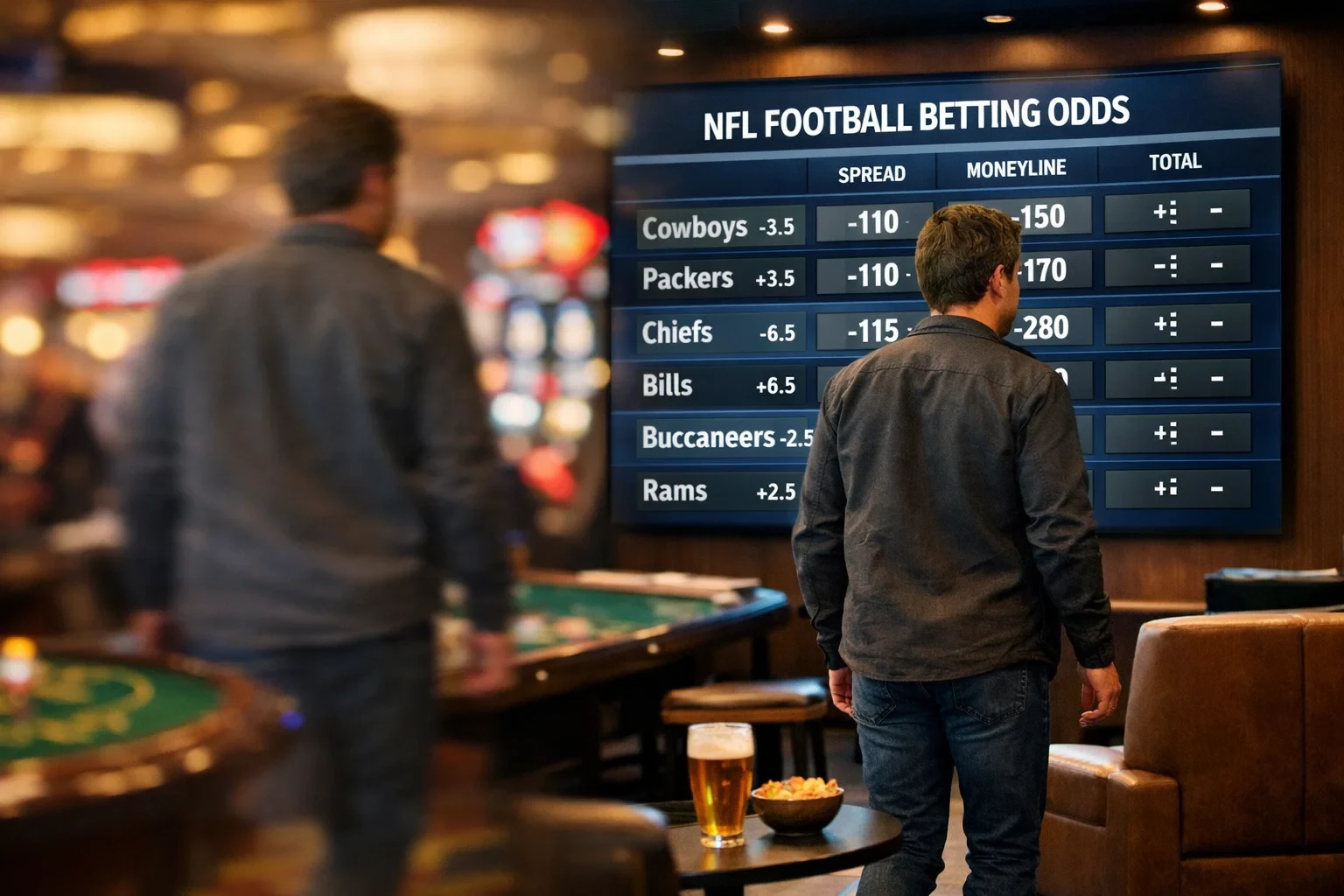
Casino players transitioning to sports betting encounter a fundamentally different gambling experience. The house edge you’ve internalized from slots and table games doesn’t apply the same way when you’re betting on the Cowboys to cover a spread. The randomness governing roulette wheels and card shuffles gives way to human performance, coaching decisions, weather conditions, and countless variables that skilled bettors attempt to analyze. This guide bridges the gap between casino gambling and sports wagering, translating concepts you already understand into the sports betting framework while highlighting the genuine differences that make sports betting its own discipline.
The good news for casino players: you already understand gambling fundamentals like bankroll management, expected value, and the reality that the house builds mathematical advantages into every offering. The adjustment involves learning how those concepts manifest in sports betting specifically, then developing the sport-specific knowledge that separates recreational bettors from those who approach wagering more seriously. You don’t need to become an expert handicapper overnight – starting with fundamentals and building gradually produces better outcomes than diving into complex strategies prematurely.
How Sports Betting Odds Work
Sports betting odds serve the same function as casino game payouts: they determine how much you win relative to your stake while embedding the operator’s profit margin. The presentation differs substantially from what you’re accustomed to in casino contexts, but the underlying mathematics operates on identical principles.
American odds – the standard format at US sportsbooks – express potential profit relative to a $100 benchmark. Negative numbers indicate favorites and tell you how much you must risk to win $100. Odds of -150 mean risking $150 to win $100 profit. Positive numbers indicate underdogs and tell you how much you’d win from a $100 bet. Odds of +200 mean a $100 bet returns $200 profit if successful. The higher the positive number, the bigger the underdog; the more negative the number, the heavier the favorite.
Converting these to familiar terms: -110 odds (the standard for most spread and total bets) represent approximately a 52.4% implied probability. You need to win more than half your bets at this price just to break even. This compares to blackjack’s roughly 49% player win rate against the house or roulette’s 47.4% on even-money bets. Sports betting’s -110 standard actually offers better mathematical odds than many casino games – if you can beat the 52.4% breakeven threshold.
The “juice” or “vig” represents the sportsbook’s built-in profit margin, analogous to the house edge in casino games. When both sides of a point spread show -110 odds, the sportsbook collects $110 from losing bettors for every $100 they pay winners. That $10 difference represents their profit margin regardless of which side wins. Unlike casino games where the house edge is fixed, sports betting margins vary by market type and operator, creating opportunities for value-conscious bettors to minimize the edge they’re fighting.
The Main Bet Types Explained
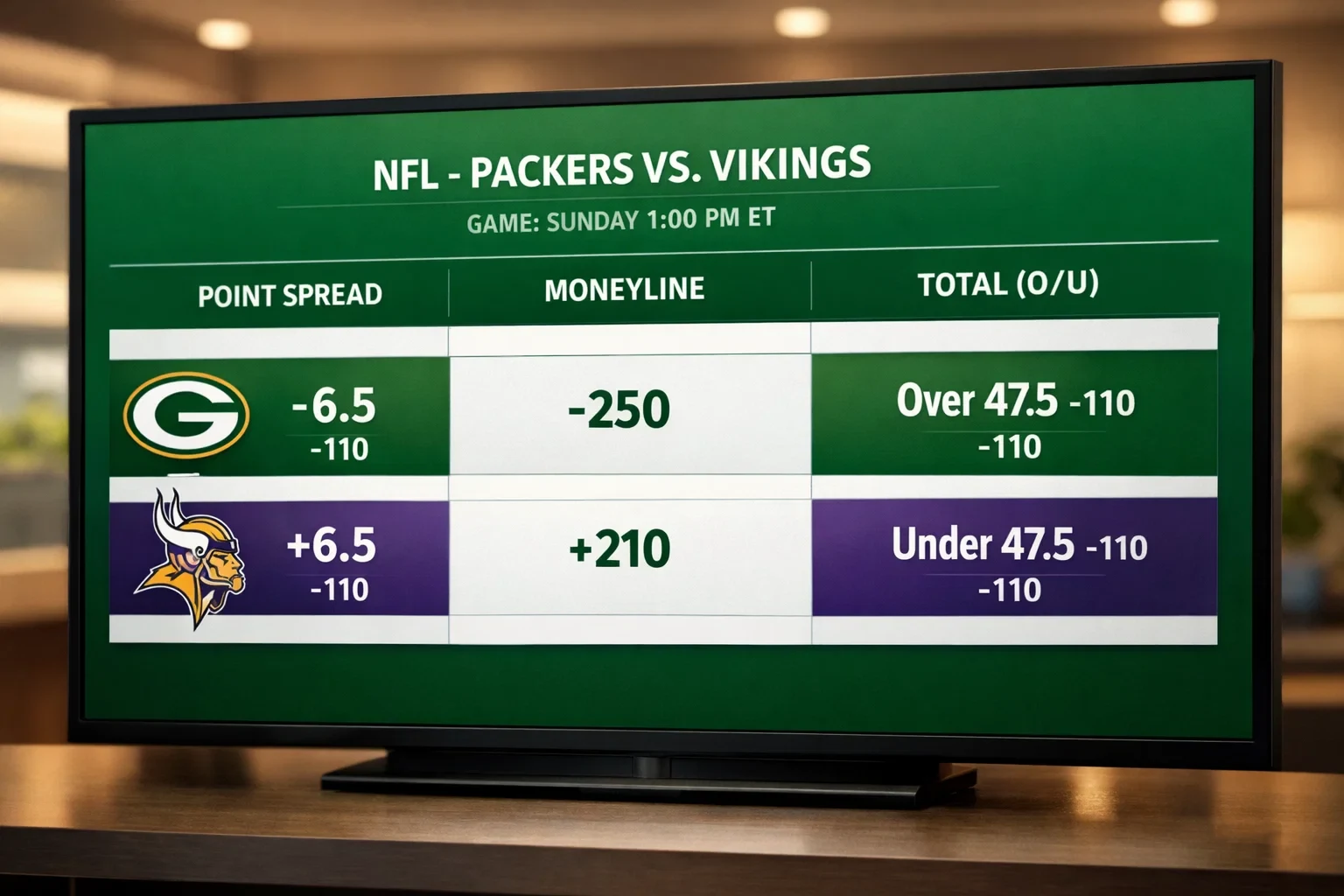
Point spreads represent the most common sports betting format, designed to create roughly equal action on both sides of a game by handicapping the expected margin of victory. If the Chiefs are 7-point favorites over the Broncos, betting the Chiefs means they must win by more than 7 points for your bet to succeed. Betting the Broncos means they can lose by up to 6 points and your bet still wins. The spread transforms lopsided matchups into approximately 50/50 propositions from a betting perspective.
Moneylines strip away the point spread complexity – you’re simply betting on which team wins outright. The odds adjust to reflect each team’s perceived winning probability. Heavy favorites might show -300 (risk $300 to win $100) while big underdogs show +250 (risk $100 to win $250). Moneyline betting works best when you have conviction about game outcomes but uncertainty about margins, or when the spread presents unfavorable value compared to the outright win probability.
Totals (over/unders) shift focus from game winners to combined scoring. If the total is set at 48.5, betting the over wins if both teams combine for 49 or more points; betting the under wins at 48 or fewer. Totals appeal to bettors who see high-scoring or defensive games developing without strong conviction about which team wins. Weather conditions, pace of play, and defensive matchups often inform total betting more than spread or moneyline analysis.
Parlays combine multiple bets into single wagers requiring all selections to win. A three-team parlay at standard odds pays roughly +600 compared to the approximately +271 you’d get betting each game individually and winning all three. The increased payout reflects dramatically reduced probability – miss any leg and the entire parlay loses. Casino players recognize this dynamic from progressive jackpots: bigger payouts come with correspondingly worse odds.
Understanding Value in Sports Betting
Here’s where sports betting diverges most significantly from casino gambling: the possibility of positive expected value. Casino games offer fixed house edges that guarantee long-term player losses regardless of strategy (card counting excepted). Sports betting odds, by contrast, represent opinions about probabilities that can be wrong. When a sportsbook prices a team at +150 but their true winning probability suggests +120 odds would be fair, betting that team offers positive expected value despite the negative overall odds.
This concept transforms how you should think about winning and losing. A bet can be “correct” even when it loses if you had positive expected value when placing it. Conversely, a winning bet placed at poor value was still a mistake that happened to work out. This probability-focused framework replaces the outcome-focused thinking that dominates casino play, where the house edge ensures all outcomes converge toward expected loss over time.
Finding value requires either superior information or superior analysis compared to the market consensus reflected in betting lines. The odds incorporate everything publicly known about teams, players, injuries, and matchups. Beating the market means identifying factors the odds underweight or overweight – a substantially harder task than following basic blackjack strategy. Most recreational bettors don’t consistently find value, which is why sportsbooks remain profitable despite not having fixed mathematical edges.
The practical implication: approach sports betting expecting to pay for entertainment rather than planning to profit consistently. The value-seeking framework helps you make better decisions and potentially reduce losses, but the skill required for consistent profit exceeds what most casual bettors will develop. Honest assessment of your edge – or lack thereof – produces healthier betting habits than unrealistic profit expectations.
Translating Casino Concepts to Sports Betting
Bankroll management principles transfer directly from casino contexts. The 1-5% per-bet sizing guidelines you might follow for table games apply equally to sports wagers. Betting $50 on a game when your sports betting bankroll is $1,000 (5% sizing) provides enough cushion to absorb losing streaks without depleting your betting capital. Aggressive sizing amplifies both wins and losses, often accelerating the latter for recreational bettors without significant edges.
Variance operates differently across gambling formats. A slot session might swing thousands of dollars in minutes due to concentrated high-variance spins. Sports betting variance plays out over longer timeframes – you might have a losing week or month that regression will eventually correct if your underlying analysis has merit. Understanding that sports betting outcomes require patience and sample size helps avoid the emotional responses that losing streaks trigger.
The concept of game selection translates interestingly. In poker, you choose tables based on opponent skill; in sports betting, you choose markets based on your knowledge advantages. Betting NFL spreads when you follow the league closely makes more sense than betting Korean baseball because both options exist. Focus your action where you have genuine understanding rather than betting broadly across unfamiliar territories just because markets are available.
House edge equivalents help compare sports betting to casino games you understand. Standard -110 juice translates to approximately 4.5% house edge – better than roulette (5.26% American, 2.70% European) but worse than blackjack with basic strategy (around 0.5%). Parlay house edges escalate dramatically, reaching 20-35% for multi-leg bets. Understanding where sports betting falls on the house edge spectrum helps you assess its entertainment cost relative to other gambling options.
Getting Started Practically
Start with sports you actually follow. Your existing knowledge of teams, players, and league dynamics provides context that pure statistical analysis misses. A casual NFL fan betting football games has meaningful advantages over that same person betting Premier League soccer they’ve never watched. Build your sports betting foundation on sports where you already possess baseline knowledge.
Begin with simple bet types before exploring exotic options. Point spreads, moneylines, and totals on major professional sports offer the most efficient markets with the smallest edges to overcome. Player props, same-game parlays, and alternative lines carry higher margins that compound recreational bettors’ disadvantages. Master fundamentals before advancing to complex wager types that require more sophisticated analysis.
Use single-bet wagering before attempting parlays. The parlay payouts attract recreational bettors, but the mathematics heavily favor the house. Starting with straight bets develops your handicapping instincts without the compounded difficulty that parlay betting introduces. Once you’re comfortable evaluating individual games, you can make informed decisions about when – if ever – parlay betting makes sense for your approach.
Track your results from the beginning. Recording every bet with odds, stake, and outcome creates data for honest performance assessment. Most bettors overestimate their success because they remember wins more vividly than losses. Objective tracking reveals actual performance, helping you identify strengths to exploit and weaknesses to address. The discipline of recording bets also slows down impulsive wagering.
Get the full betting lines explained.
Managing Expectations Realistically

Sports betting entertainment costs typically exceed casino gambling for recreational players. The average bettor loses, just as average casino visitors lose. The difference lies in the illusion of control – analyzing games and making selections feels more skillful than pulling slot handles, encouraging larger action and greater losses. Acknowledging this dynamic before starting helps establish sustainable betting habits.
Winning consistently requires either significant skill development or acceptance that you’re paying for entertainment. The small percentage of bettors who profit long-term dedicate substantial time to analysis, model building, and line shopping across multiple platforms. Recreational bettors rarely develop this edge because the time investment exceeds their entertainment goals. Both approaches can be valid – just be honest about which category describes your situation.
The casino player’s disciplined approach to gambling provides excellent foundation for sports betting. Loss limits, session boundaries, and entertainment-focused mindsets serve you well in both contexts. Apply the gambling discipline you’ve developed rather than abandoning it because sports betting feels different. The fundamental reality – you’re risking money on uncertain outcomes with built-in house advantages – remains identical regardless of whether you’re betting blackjack hands or football games.
Integration with your existing casino entertainment can add variety without dramatically changing your gambling profile. Allocating part of your gambling budget to sports betting, using the same bankroll management principles, and treating both activities as entertainment creates a sustainable combined approach. The transition from casino-only to integrated casino sportsbook participation works best when you view sports betting as addition rather than replacement of existing entertainment habits.
Double your available payout on top casino sports book.
