

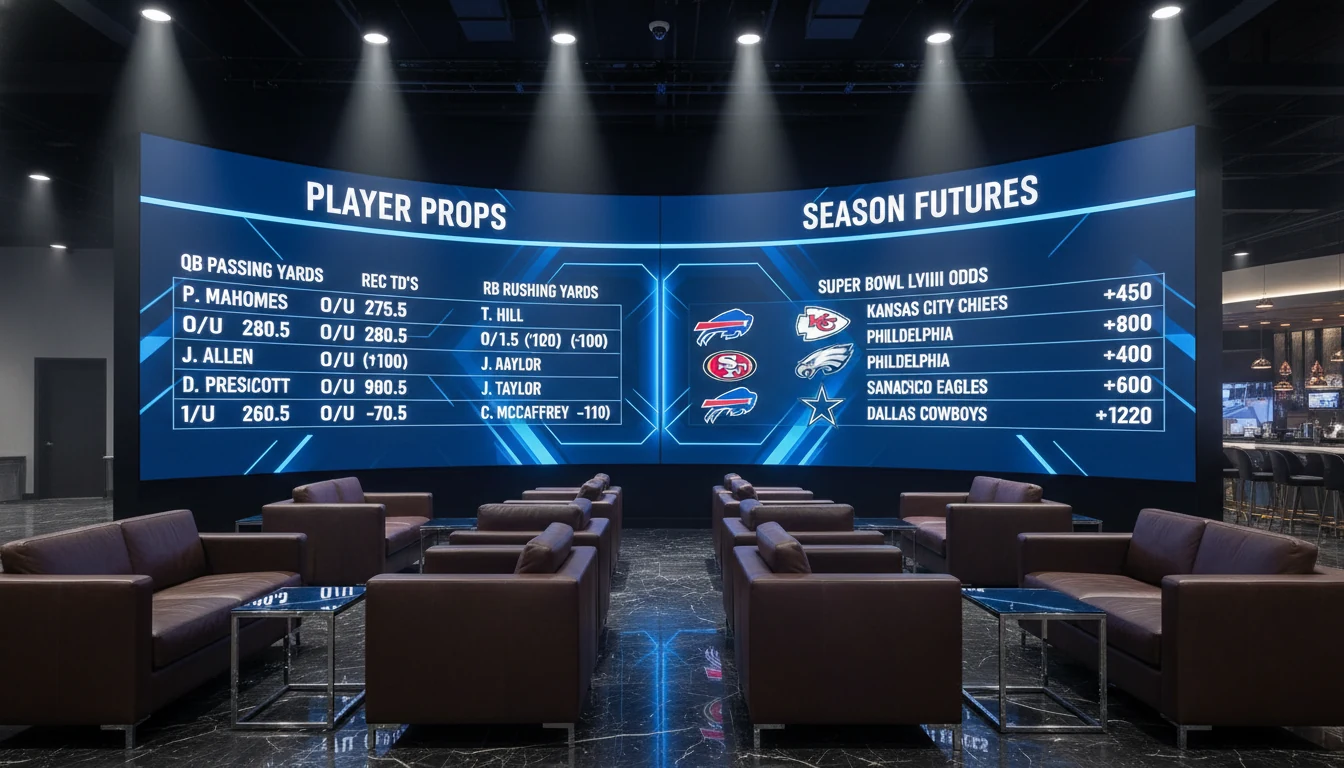
Beyond the standard spreads, moneylines, and totals lies a vast universe of proposition bets and futures markets that most recreational bettors never properly explore. Props let you bet on specific player performances, game occurrences, and countless other outcomes beyond who wins or by how much. Futures let you bet on season-long results months before they resolve. Both categories offer opportunities for bettors willing to develop specialized knowledge, though they also carry traps that extract value from those who approach them casually.
The appeal of props and futures extends beyond potential profit. They let you engage with sports at granular levels that main-line betting doesn’t touch. Betting Patrick Mahomes’ passing yards creates investment in every throw; betting the Chiefs to win the Super Bowl in August creates season-long engagement. This deeper involvement represents genuine entertainment value even when the mathematics don’t favor you. Understanding these markets lets you participate more fully in sports betting’s expanding ecosystem while recognizing where edges might exist and where they definitely don’t.
Player Props Explained
Player props focus betting attention on individual performance metrics rather than team outcomes. How many passing yards will the quarterback throw? Will the running back score a touchdown? How many rebounds will the center grab? These markets isolate specific statistical outputs from the broader game context, creating betting opportunities independent of who wins.
The over/under structure dominates player prop betting. Sportsbooks set lines representing expected performance: Patrick Mahomes over/under 275.5 passing yards. Betting the over wins if Mahomes throws 276+ yards; the under wins at 275 or fewer. Standard juice applies – typically -110 to -115 on both sides – though prop margins often run higher than main-line markets due to less efficient price discovery.
Anytime scorer props offer yes/no propositions on whether specific players will score during games. “Tyreek Hill anytime touchdown scorer: Yes -120 / No -110” creates a simple bet on whether Hill reaches the end zone by any method. These markets appeal to bettors with opinions on scoring distribution within games without requiring conviction about margins or totals.
Alternative lines expand prop betting flexibility. If standard passing yards shows 275.5, alternative lines might offer 250.5 at higher plus-odds or 300.5 at lower minus-odds. These alternatives let bettors calibrate their positions based on specific expectations rather than accepting whatever number the sportsbook chose as the primary line.
The challenge with player props involves information asymmetry working against bettors. Sportsbooks employ analysts who build models incorporating injury reports, defensive matchups, weather conditions, and countless other factors. Recreational bettors rarely access equivalent analytical depth. The props that feel like obvious values often aren’t – the sportsbook has already priced in whatever public information led you to that conclusion.
Game Props Beyond Player Performance
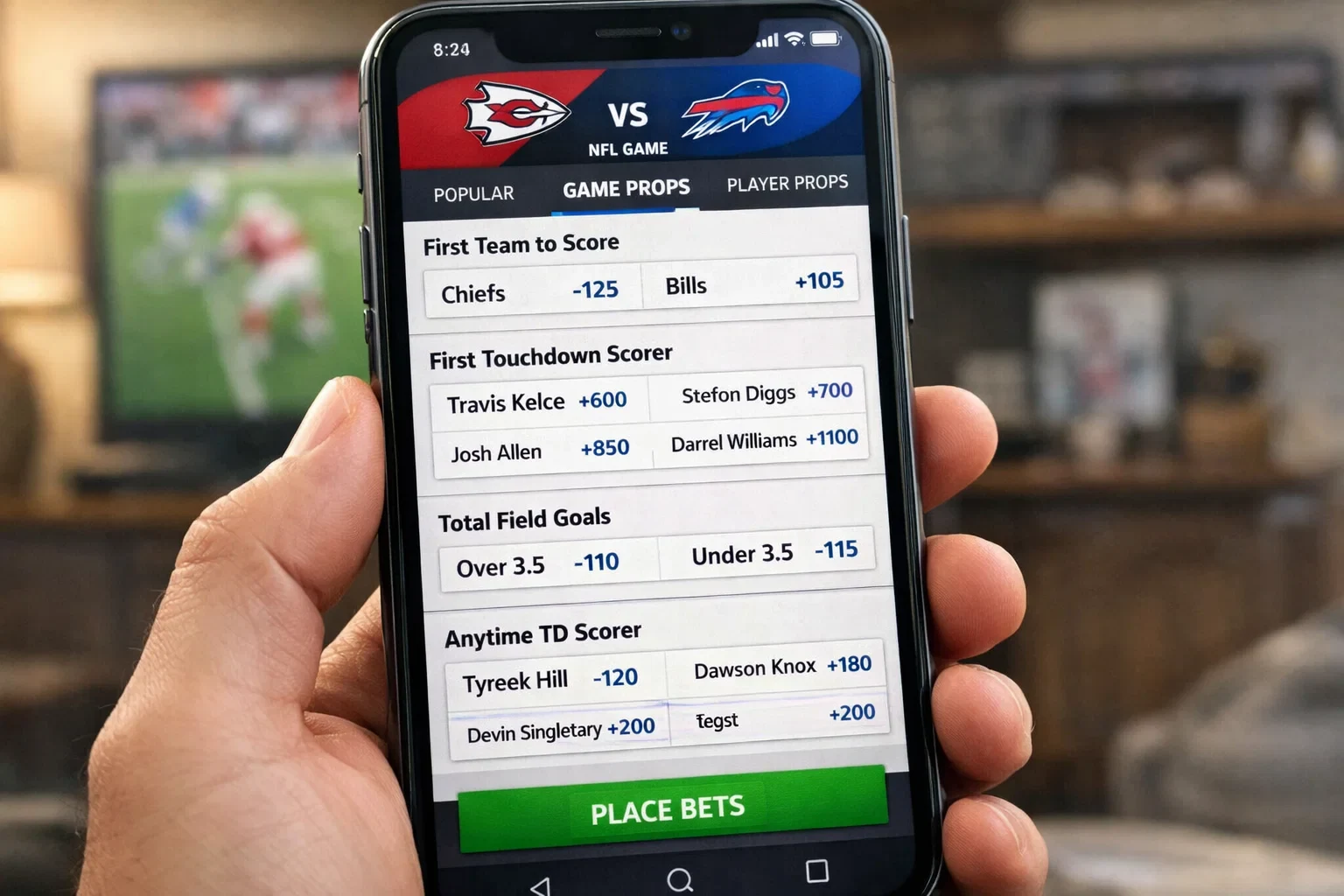
Game props extend proposition betting to team and situational outcomes that don’t directly involve final scores. Will there be a safety? Which team scores first? Will either team score in the final two minutes of the first half? These markets create engagement with specific game developments rather than overall results.
Scoring props dominate game proposition categories. First team to score, last team to score, first scoring method (touchdown, field goal, safety), whether both teams score in each quarter – the variations multiply endlessly. Each prop creates a discrete betting opportunity with its own probability assessment and corresponding odds.
Statistical props focus on team-level outputs: total rushing yards for one team, combined penalties, total punts in the game. These markets reward bettors who analyze team tendencies and matchup dynamics without requiring game-winner predictions. A strong opinion about defensive line dominance might translate to betting the under on opposing rushing yards regardless of which team wins.
Situational props capture unlikely but possible occurrences: overtime (typically +700 to +1200), scoreless quarters, specific score combinations. These longshot markets carry substantial house edges hidden in attractive-looking odds. The +800 on overtime sounds exciting until you calculate that true probability suggests even-longer odds would be fair. Sportsbooks consistently underpay longshot props, making them poor value despite entertainment appeal.
Same-game parlays combine multiple props and main-line bets from single games into unified wagers. The quarterback passing yards over plus his team covering the spread plus the game total going over – all combined into one bet requiring all legs to hit. SGPs offer massive payouts but carry the industry’s highest margins, often 15-25% house edge. The convenience of single-ticket construction disguises unfavorable mathematics.
Futures Markets Structure
Futures bets resolve over extended timeframes rather than single games. Super Bowl winner, NBA championship, World Series winner, MVP awards, division titles – these markets open months before outcomes determine, creating long-term betting positions that require capital commitment and patience.
The pricing reflects probability distributions across many possible outcomes. Super Bowl futures might show 25+ teams with odds ranging from +300 favorites to +50000 extreme longshots. Every team except the eventual winner loses, meaning most futures bets lose regardless of how well-informed the selections were. This structure favors sportsbooks structurally – they collect from everyone who bet losers.
Futures odds move substantially between opening and resolution. A team opening at +2500 to win their division might drop to +150 by November if they’ve performed well. Early bettors who identified undervalued teams before their success capture better prices than those betting after results confirm quality. Conversely, teams that underperform their preseason expectations see odds drift longer, trapping early bettors in losing positions.
Hedging becomes possible as futures bets approach resolution. If you hold a +2000 Super Bowl ticket on a team reaching the championship game, you can bet their opponent to guarantee profit regardless of the final outcome. This hedging sacrifices maximum potential payout to lock in guaranteed returns – a risk management choice each bettor must make based on their circumstances and preferences.
Season-long player props function similarly to team futures. Will a quarterback throw over/under 4,000 yards this season? Will a receiver reach 1,000 yards? These markets price seasonal statistical expectations, creating positions that resolve only after complete seasons of performance. Injury risk looms large – your 4,500-yard passing bet becomes worthless if the quarterback tears his ACL in week three.
Finding Value in Alternative Markets
The value proposition differs substantially between props/futures and main-line betting. Main markets receive massive betting volume that efficiently prices outcomes – finding genuine edges is extremely difficult. Props and futures receive less volume, creating potential inefficiencies that informed bettors might exploit.
Player props sometimes misprice correlations that attentive bettors notice. If weather forecasts predict high winds that main totals have already incorporated, individual passing props might lag in adjustment. The game total dropping from 48.5 to 42.5 might precede the quarterback’s passing yards dropping from 275.5 to 255.5. Bettors who notice these timing discrepancies can capture value before lines fully adjust.
Futures markets overvalue recent performance and undervalue regression. Teams that finished strong the previous season receive shorter odds than probability suggests; teams that collapsed late receive longer odds than warranted. The public memory of recent outcomes distorts probability assessments in predictable ways that contrarian bettors can sometimes exploit.
Prop betting rewards specialization over breadth. Becoming expert on one team’s receiving corps creates genuine knowledge advantage over sportsbooks pricing hundreds of props across the entire league. The bettor who understands target share distribution, defensive matchup tendencies, and red zone usage for specific receivers can identify mispriced props that generalist approaches miss.
The practical challenge involves finding sufficient volume of genuinely mispriced opportunities to overcome the structural disadvantages. Props carry higher margins than main lines; futures lock up capital for extended periods; both categories require specialized knowledge to beat. Most recreational bettors would honestly be better served sticking to main markets rather than venturing into territories where their informational disadvantages compound.
Understand the specific betting taxes us.
Strategic Considerations for Props and Futures

Bankroll allocation should reflect the higher variance and house edges in these markets. If your standard bet is $100 on main lines, consider $25-50 on individual props and smaller futures positions. The entertainment value per dollar remains high at reduced stakes; the mathematical disadvantage doesn’t scale – $25 on a bad prop bet loses the same percentage as $100.
Avoid the over bias in player props. Research consistently shows that overs on rushing yards, receiving yards, and similar props hit less frequently than 50% at standard -110 pricing. There’s only one path to overs – the player performs well – but countless paths to unders: injury, game script, defensive dominance, weather, blowouts removing starters early. Discipline yourself to bet unders at least as frequently as overs.
Futures timing affects value significantly. Early-season futures often offer better prices on eventual winners because uncertainty remains high. Waiting until favorites emerge means accepting shorter odds. However, early betting ties up capital and faces maximum injury/uncertainty risk. Balance timing considerations against capital management and information development.
Track your prop and futures results separately from main-line betting. Many bettors who break even or profit slightly on main markets lose substantially on props and futures without realizing it. Their overall results obscure category-specific performance. Understanding where you actually perform well – versus where you merely enjoy betting – improves both results and enjoyment.
Consider prop betting as entertainment spending with occasional positive outcomes rather than a profit strategy. The house edges, information disadvantages, and variance profiles make consistent profit extremely difficult. Approaching props and futures with entertainment framing – enjoying the engagement they create while accepting the expected cost – produces healthier relationships with these markets than profit-focused framing that sets unrealistic expectations.
Take much fewer risks on top casino sports book.
