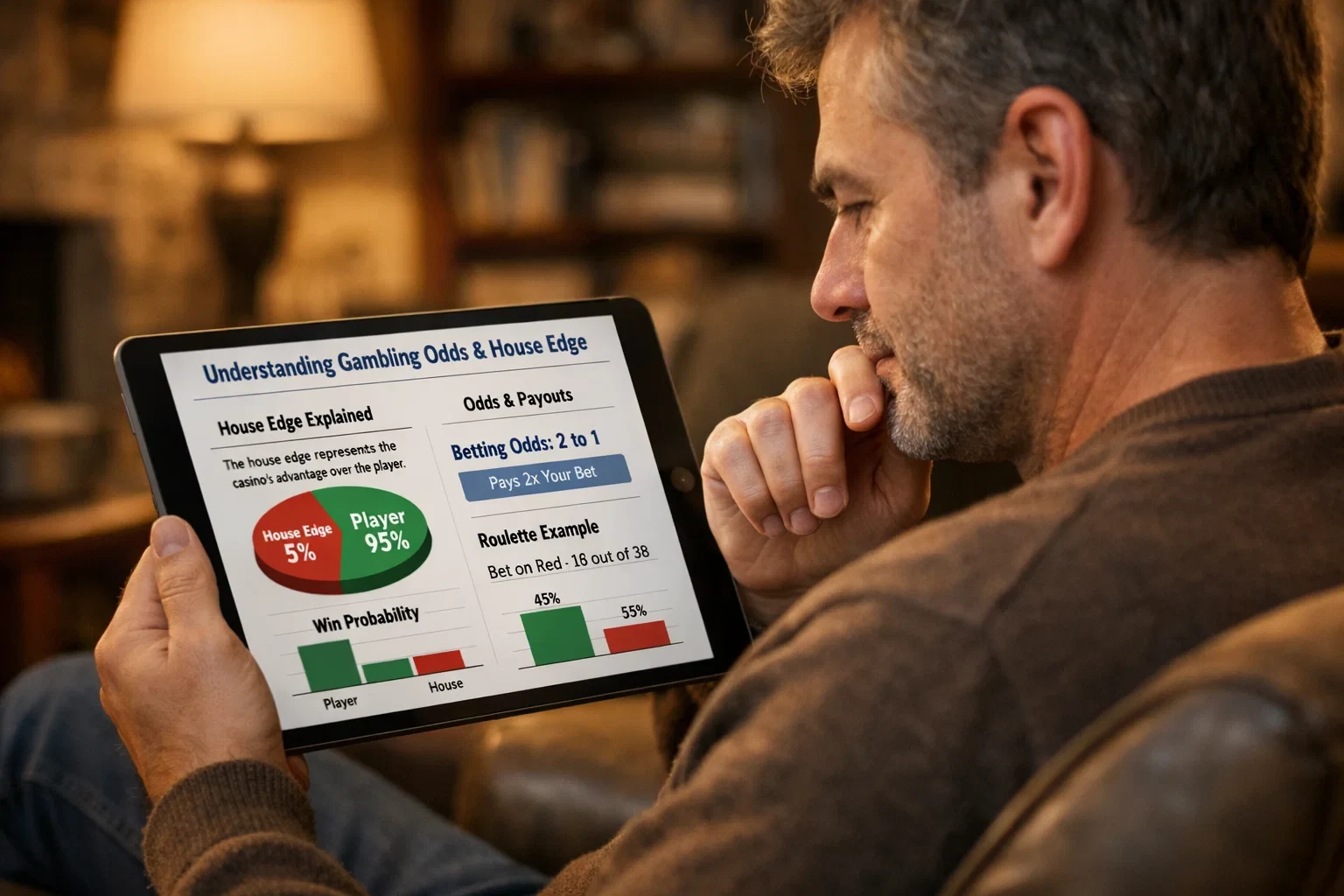
House edge represents the casino’s mathematical advantage built into every game offering, expressed as a percentage of your wagers that the operator expects to retain over time. Understanding house edge transforms how you evaluate gambling options, enabling informed decisions about where to spend entertainment dollars based on actual mathematical costs rather than feelings or misconceptions. This knowledge doesn’t make you a winner – it helps you lose less while understanding exactly what you’re paying for gambling entertainment.
The comparison between casino game house edges and sports betting margins reveals surprising insights that contradict common assumptions. Many recreational gamblers believe sports betting offers better odds than casino games, but the reality depends entirely on game selection and betting approach. A skilled blackjack player faces smaller disadvantages than most sports bettors; a slot enthusiast might face larger edges than a parlay addict. Understanding these comparisons helps you allocate your gambling budget toward options that best align with your entertainment preferences and mathematical tolerance.
Use fast casino payment methods.
Casino Game House Edges Breakdown
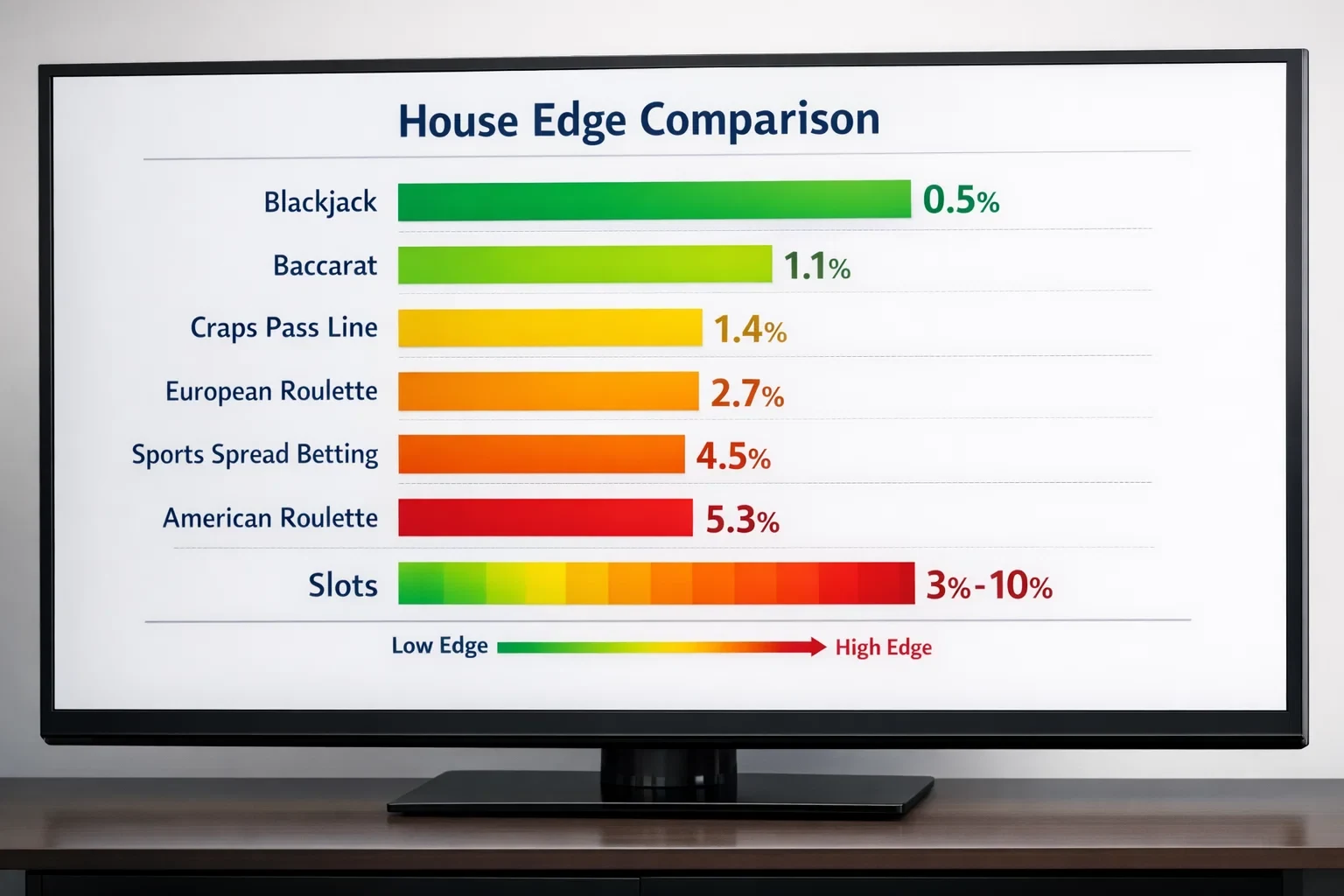
Blackjack with basic strategy offers the lowest house edge commonly available in casinos – approximately 0.5% under standard rules. This means the casino expects to keep fifty cents per $100 wagered over time. Skilled players face nearly fair games; unskilled players deviating from basic strategy might face 2-3% edges instead. The gap between optimal and casual play represents the largest “self-inflicted” house edge increase in mainstream casino games.
Craps presents variable house edges depending on bet selection. Pass/Don’t Pass bets carry 1.41% edge; laying/taking odds carries zero house edge (the only truly fair bet in most casinos). However, proposition bets at the center of the layout carry edges from 5% to nearly 17%. The same game offers both reasonable and terrible mathematics depending on which squares receive your chips.
Roulette edges are fixed by wheel design. European single-zero wheels carry 2.70% edge on nearly all bets. American double-zero wheels carry 5.26% edge. The specific number or color you choose doesn’t matter – all standard bets carry identical edges within each wheel type. Only the five-number bet (0-00-1-2-3) on American wheels offers worse odds at 7.89%.
Baccarat main bets rank among the best in casinos: Banker at 1.06% edge (minus 5% commission on wins), Player at 1.24% edge. The Tie bet at 14.36% edge represents one of the worst standard wagers available. Baccarat’s simplicity – no decisions beyond initial bet – combined with favorable main-bet edges explains its popularity among serious gamblers despite its association with high rollers.
Slot machines span enormous edge ranges based on specific games. High-RTP online slots might carry 2-3% house edge (97-98% RTP). Low-RTP machines, particularly in land-based casinos, might carry 8-15% edges (85-92% RTP). Unlike table games where edges are standardized, slot selection creates 5x or greater differences in expected losses for identical entertainment experiences.
Sports Betting Margin Structures
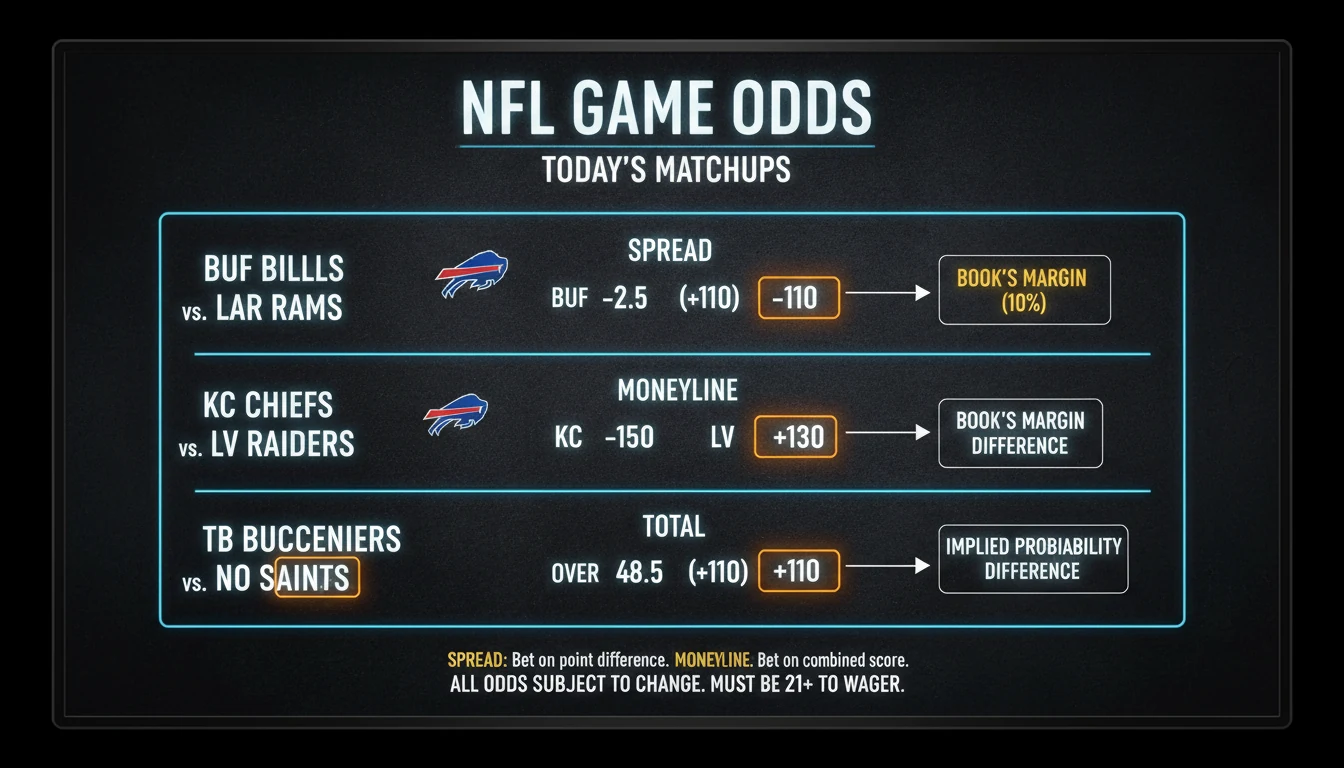
Sports betting “house edge” functions differently than casino game edges. The vig or juice built into odds creates bookmaker profit regardless of outcomes, but the percentage varies by market type and bettors can potentially overcome it through skill – a fundamental difference from fixed casino edges.
Standard -110 pricing on both sides of a spread implies approximately 4.5% total margin, translating to 2.38% edge per side if you assume 50/50 win probability. This compares favorably to many casino games – better than slots, worse than optimal blackjack, comparable to baccarat main bets. However, most recreational bettors don’t win 50% of spread bets, making their effective edge substantially worse.
Moneyline margins vary widely based on line pricing. A -150/+130 line carries higher margin than -110/-110 spread pricing. Longshot moneylines (+500, +1000) often embed substantial additional margin as sportsbooks exploit recreational bettor attraction to big potential payouts. The posted odds don’t reflect true probability – the gap between implied probability and actual probability contains the sportsbook’s profit.
Parlay margins compound individual bet margins, creating effective house edges that rival or exceed the worst casino games. A two-leg parlay at -110 per leg carries approximately 10% effective edge. Five legs can exceed 25-30% edge – comparable to the worst slot machines. The attractive payouts disguise mathematical realities that sophisticated players recognize and casual bettors ignore.
Props and exotic bets carry higher margins than main markets due to less efficient price discovery and recreational bettor appeal. Player props might embed 6-8% margins; same-game parlays run 15-25% effective edge. These markets subsidize more efficient main-line pricing while providing entertainment-focused options for casual bettors.
Comparative Analysis
Skilled players find the best mathematics in table games, not sports betting. A blackjack player executing perfect basic strategy faces 0.5% edge with no skill ceiling – just execute the known optimal strategy. A sports bettor needs to win 52.4% at -110 just to break even, and achieving that win rate requires genuine handicapping skill that most recreational bettors don’t develop.
For unskilled players, the comparison reverses. Random sports betting on spread games at -110 creates 4.5% effective edge; random blackjack play without basic strategy might create 2-3% edge through suboptimal decisions. Neither is good, but uninformed blackjack actually costs less than uninformed spread betting when measured per dollar wagered.
Slots versus sports betting depends entirely on game selection. High-RTP slots (97%+) offer better mathematical propositions than poorly-informed parlay betting. Low-RTP slots (90-92%) offer worse propositions than disciplined single-game spread betting. The conventional wisdom that “anything beats slots” ignores both the range of slot RTPs and the reality that most sports bettors lose at rates exceeding many casino games.
Entertainment duration complicates comparisons. $100 might fund two hours of blackjack play, thirty minutes of sports betting (if watching games), or variable slot time depending on bet sizing and volatility. Cost-per-hour calculations matter alongside raw house edge percentages. The game with lowest edge doesn’t automatically provide best value if sessions are dramatically shorter.
Practical Implications
Choose gambling activities based on accurate mathematical understanding rather than assumptions or feelings. If you enjoy slots, play high-RTP options rather than assuming all slots are equivalent. If you enjoy sports betting, recognize that your actual edge depends on your skill relative to the market, not just the posted juice.
Parlays are genuinely poor mathematical propositions regardless of how entertaining they feel. The excitement of sweating multiple games doesn’t change the reality that you’re paying 10-30% margins depending on leg count. If you enjoy parlays, treat them as premium entertainment purchases rather than strategic betting – and size accordingly.
Bankroll allocation should reflect mathematical realities. Games with higher house edges deplete bankrolls faster, meaning smaller session allocations make sense for slots or prop betting compared to blackjack or disciplined spread betting. This isn’t about avoiding high-edge games entirely – it’s about sizing appropriately for each activity’s mathematical profile.
The concept of “edge” works fundamentally differently across contexts. Casino games offer no opportunity for genuine positive expectation – optimal play simply minimizes inevitable disadvantage. Sports betting theoretically allows positive expectation through superior analysis, but achieving it requires skill development most recreational bettors don’t pursue. Honestly assessing where you fall on this spectrum helps establish realistic expectations.
Beyond the Numbers
House edge calculations assume infinite play, which no actual session achieves. Short-term variance dominates individual experiences regardless of mathematical edges. You might win heavily at high-edge games and lose at low-edge games through pure chance. The mathematics matter over thousands of wagers, not individual sessions.
Entertainment value exists independent of house edge. A 5% edge slot you genuinely enjoy might provide better entertainment value than a 0.5% edge blackjack game you find tedious. Mathematical optimization isn’t the only consideration – enjoyment matters too. Just recognize what each option actually costs.
Gambling should function as entertainment spending, not income strategy. House edges ensure the casino/sportsbook profits over time; your goal involves minimizing cost for the entertainment received, not generating positive returns. This framing produces healthier gambling relationships than treating any form of gambling as a path to profit.
The informed gambler understands exactly what they’re paying, chooses options aligned with both mathematical preferences and entertainment preferences, sizes appropriately for their bankroll and the edge they face, and enjoys gambling without unrealistic expectations. House edge knowledge enables this informed approach – transforming gambling from confusing guesswork into conscious entertainment choices with understood costs.
Find totally hidden value via top casino sports book.
