
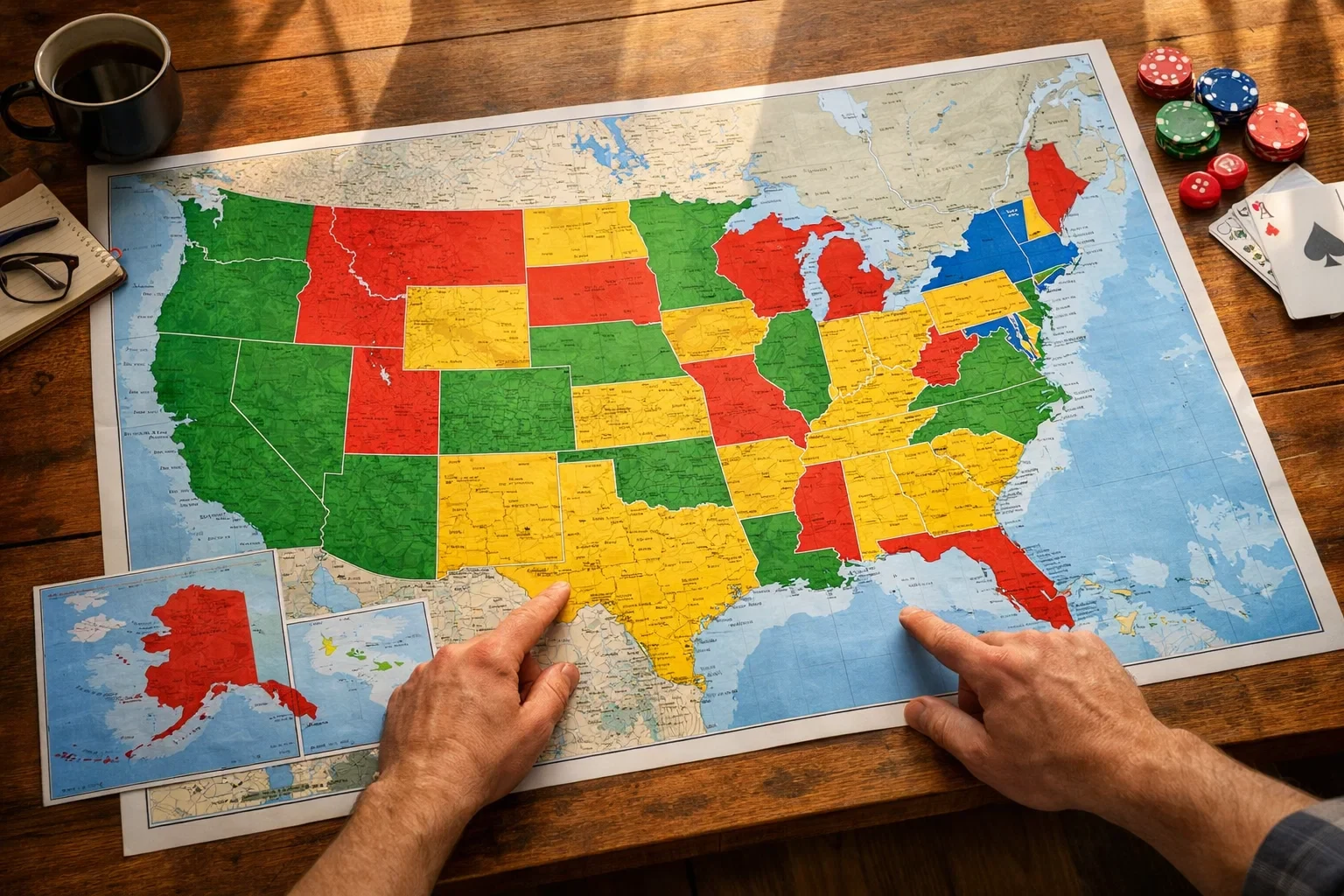
The American sports betting landscape exists as a patchwork of state regulations that defies simple summarization. Since the Supreme Court struck down the federal ban on single-game wagering in 2018, individual states have pursued legalization at their own pace, with their own rules, and with wildly different approaches to integrating casino gaming with sportsbook operations. Understanding where you can legally bet, what restrictions apply, and how regulations differ across state lines is essential knowledge for anyone engaging with the US gambling market.
Integrated casino sportsbooks — platforms offering both sports betting and online casino games through unified accounts — face even more complex regulatory terrain. While 30+ states now permit online sports betting, only seven states currently allow full online casino gaming. This asymmetry means the “casino sportsbook” experience varies dramatically depending on your location. Some states offer everything; others offer sports only; many offer nothing at all. Navigating this complexity requires current knowledge of both sports betting and iGaming regulations in your specific jurisdiction.
States with Full Casino Sportsbook Access
New Jersey pioneered the modern US online gambling framework and remains the gold standard for integrated casino sportsbook operations. Since 2013 for online casino and 2018 for mobile sports betting, New Jersey has offered players comprehensive legal gambling access through licensed operators. The New Jersey Division of Gaming Enforcement maintains strict oversight while allowing robust competition among operators. Players enjoy full slot selections, table games, live dealer options, and complete sportsbook functionality through unified platforms.
Pennsylvania followed New Jersey’s model, launching online casino gaming in 2019 and mobile sports betting the same year. The Pennsylvania Gaming Control Board regulates both verticals, requiring operators to obtain separate licenses for casino and sportsbook offerings. Major national brands operate integrated platforms serving Pennsylvania players, with the state’s large population making it one of the most valuable legal markets in the country.
Michigan legalized both online sports betting and online casino gaming, launching both in January 2021. The Michigan Gaming Control Board oversees operations, with the state’s tribal gaming interests participating alongside commercial operators. Detroit’s existing casino infrastructure translated smoothly into online operations, creating a competitive market with multiple integrated platform options.
Connecticut’s 2021 legislation created a limited but functional integrated market. The Mohegan and Mashantucket Pequot tribes hold exclusive rights to online casino gaming, while the state lottery operates a separate sportsbook. This fragmented structure means truly integrated casino sportsbook experiences require using tribal platforms specifically.
West Virginia and Delaware offer legal online casino and sports betting, though with smaller operator selections than larger-market states. Rhode Island joined the integrated market more recently, with the state lottery partnering with commercial operators to provide both casino and sports betting options.
Sports Betting Only States

The majority of legal sports betting states permit wagering on sporting events without authorizing online casino gaming. These states offer sportsbook platforms — often operated by the same companies running integrated platforms elsewhere — but limit casino-style gaming to physical locations or prohibit it entirely.
New York exemplifies this category dramatically. The state’s 2022 mobile sports betting launch created the nation’s largest legal sports betting market almost overnight, with billions wagered monthly through licensed operators. Yet online casino gaming remains illegal, despite significant legislative interest and operator lobbying. New York players can bet spreads and parlays from their phones but must visit physical casinos or travel to neighboring states for legal online slots and table games.
Illinois, Ohio, Arizona, Colorado, Virginia, and numerous other states occupy this sports-betting-only category. Each permits mobile sportsbook wagering under state-specific regulations while maintaining prohibitions on online casino gaming. Players in these states experience half the integrated casino sportsbook proposition — full sports betting functionality alongside absent casino options.
The regulatory logic varies by state. Some legislators view sports betting as less problematic than casino gaming due to perceived skill elements. Others face opposition from existing land-based casino interests that fear online competition. Tribal gaming compacts complicate matters in states where Native American gaming rights intersect with expansion debates. The result is a hodgepodge of sports-only states that may or may not pursue casino legalization in coming years.
States Without Legal Online Betting
Eleven states maintain complete prohibitions on both online sports betting and online casino gaming: Alabama, Alaska, California, Georgia, Hawaii, Idaho, Minnesota, Oklahoma, South Carolina, Texas, and Utah. Players in these states have no legal options for regulated online gambling of any kind.
California’s continued prohibition stands as the industry’s most significant missed opportunity. The nation’s largest state by population rejected competing ballot measures in 2022 that would have legalized sports betting, with tribal gaming interests and commercial operators unable to agree on market structure. Future legalization attempts face similar political obstacles, leaving California’s massive potential market untapped.
Texas legislators have shown interest in sports betting legalization, with bills advancing further in recent sessions than ever before. However, opposition from religious conservatives and existing gambling interests has blocked passage. The state’s 2026 legislative session may produce another attempt, though success remains uncertain.
Georgia has come close to legalizing sports betting multiple times, with legislation passing one chamber only to stall in the other. Constitutional amendment requirements complicate the path forward, requiring supermajority votes that have proven elusive.
Utah’s constitutional prohibition on gambling makes it the most permanent holdout. The state’s dominant religious culture opposes gambling expansion, and no realistic path to legalization exists in the foreseeable future.
Regulatory Bodies and Licensing
State gaming commissions and control boards regulate legal gambling operations, with structures varying significantly across jurisdictions. Understanding which body oversees your state’s gambling helps when researching operator legitimacy or filing complaints.
Dedicated gaming commissions exist in major gambling states. The New Jersey Division of Gaming Enforcement, Pennsylvania Gaming Control Board, Michigan Gaming Control Board, and similar agencies maintain exclusive focus on gambling regulation. These bodies license operators, audit compliance, investigate complaints, and enforce regulations.
Some states place gambling oversight under broader regulatory agencies or state lotteries. In these structures, gambling regulation shares resources and attention with other responsibilities, potentially affecting oversight intensity. Players should understand their state’s specific regulatory structure when evaluating platform legitimacy.
Licensing requirements ensure operators meet financial stability, technical capability, and integrity standards before accepting wagers. Licensed operators undergo background investigations, demonstrate adequate capitalization, prove technical security, and commit to responsible gambling programs. This vetting process — while imperfect — provides meaningful consumer protection absent from unlicensed offshore alternatives.
Use strict bankroll management tips.
Recent Developments and Future Outlook
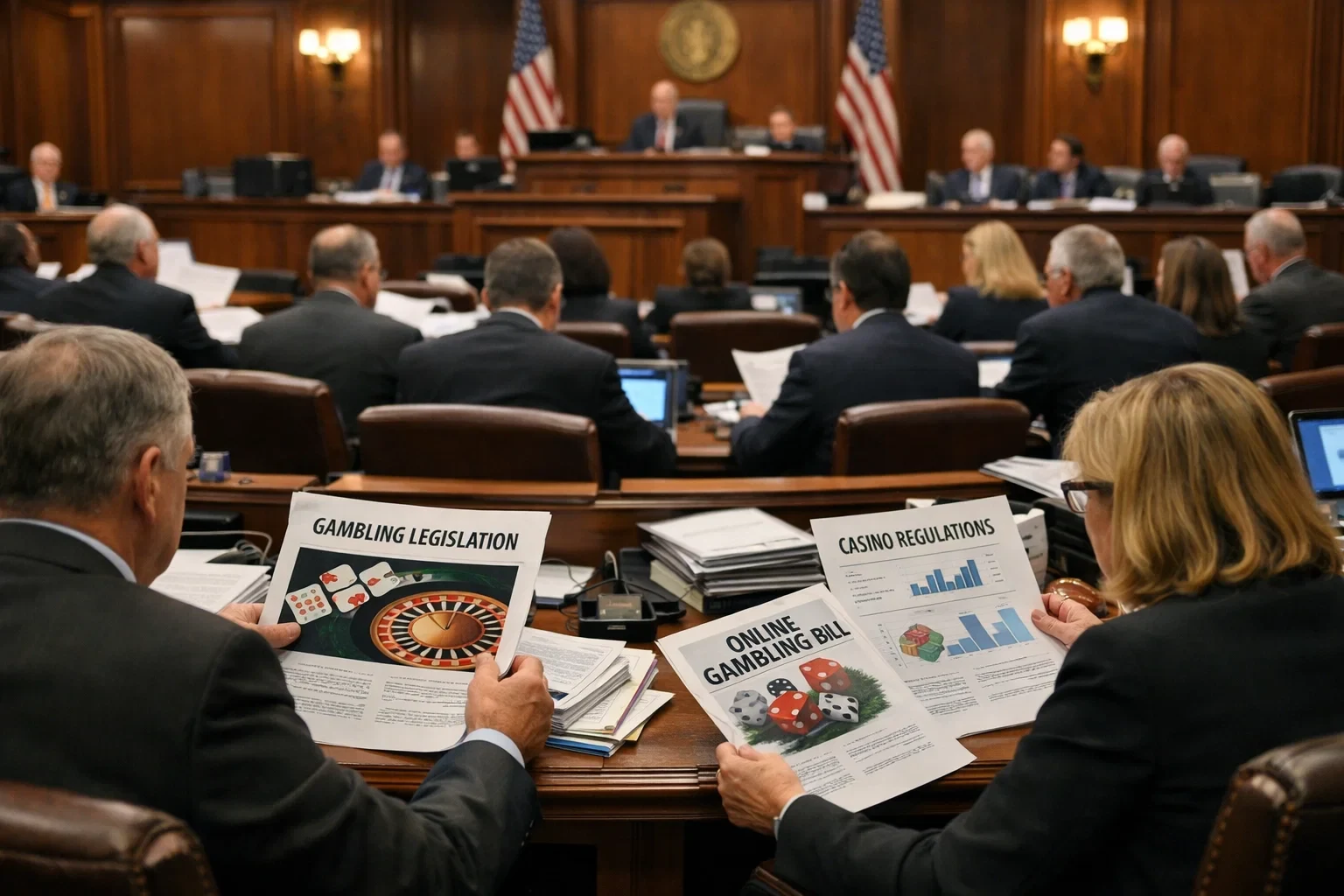
Missouri’s November 2024 voter approval of sports betting represents the most recent state to join the legal market. The state is currently completing rulemaking and licensing processes, with launch expected in 2026. This ballot initiative approach may inspire similar efforts in other states where legislative paths have stalled.
Several states are actively considering iGaming expansion that would create new integrated casino sportsbook markets. New York, Illinois, and Massachusetts have all seen legislative interest in online casino legalization, though none have yet passed enabling legislation. Success in any of these large-population states would significantly expand the integrated platform market.
The federal landscape remains largely unchanged, with states retaining primary regulatory authority over gambling within their borders. Congressional interest in nationwide standards has produced proposals but no enacted legislation. Players should expect continued state-by-state variation rather than federal harmonization.
Sweepstakes casinos — platforms operating in legal gray areas through alternative currency models — have faced increasing regulatory hostility in 2026. Multiple states have passed bans or sent cease-and-desist orders to these operators, clarifying that legitimate gambling requires state licensing regardless of currency mechanics. This crackdown reinforces the importance of using properly licensed operators in states with legal gambling frameworks.
Practical Considerations for Players
Verify your state’s current legal status before engaging with any gambling platform. Regulations change; what was illegal last year might be legal now, and vice versa. State gaming commission websites provide authoritative information about legal operators and current regulations.
Understand that crossing state lines changes your legal options. The mobile sports betting available at home may be inaccessible when traveling to prohibition states. Geolocation technology enforces these boundaries — platforms detect your physical location and restrict access accordingly.
Licensed operators in legal states provide consumer protections unavailable from offshore alternatives. Dispute resolution mechanisms, fund security requirements, and responsible gambling tools exist because regulations mandate them. Using licensed platforms isn’t just legally safer; it’s practically safer for your funds and personal information.
Accept that the integrated casino sportsbook experience remains geographically limited. If you want unified access to sports betting and online casino gaming through a single regulated platform, you currently need to be in New Jersey, Pennsylvania, Michigan, Connecticut, West Virginia, Delaware, or Rhode Island. Everywhere else, you’re either limited to sports betting or completely prohibited from online gambling — regardless of what offshore operators might offer to circumvent these restrictions.
Stay fully focused gambling on top casino sports book.
