

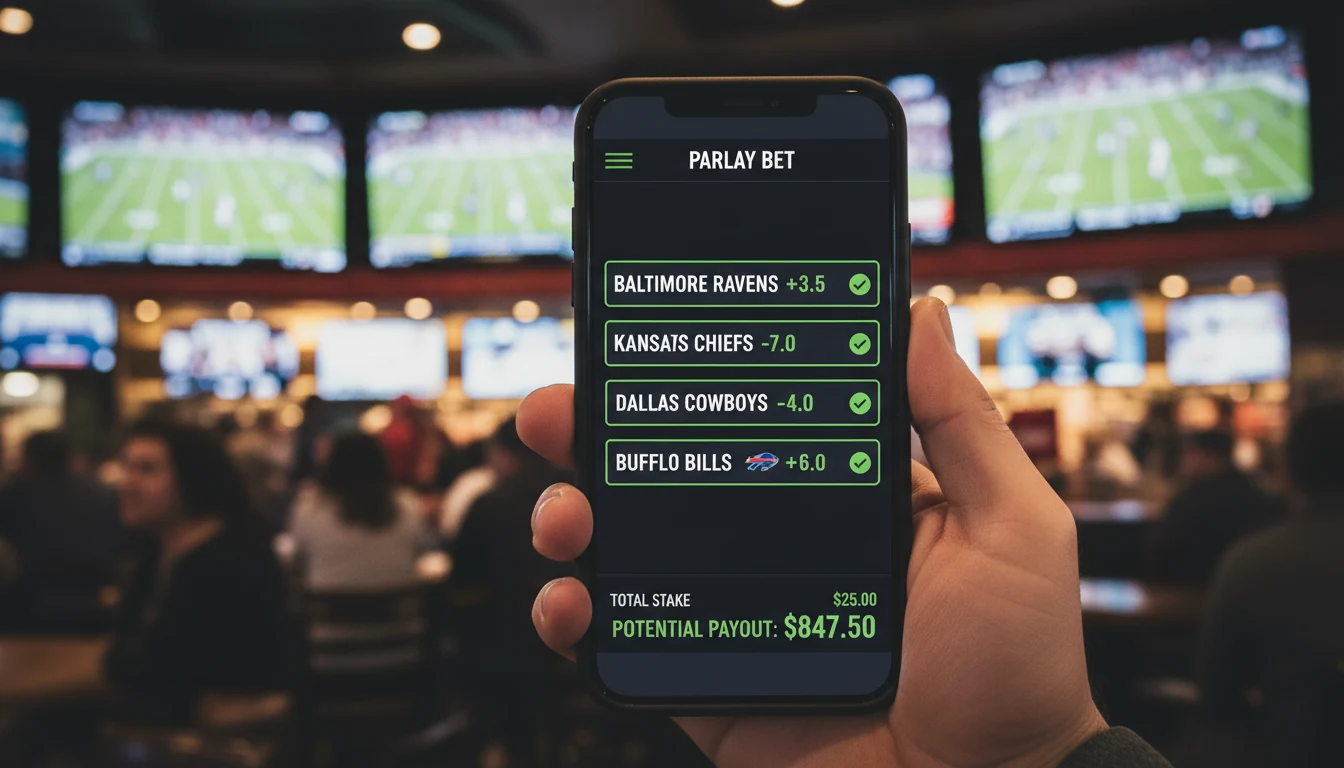
Parlays generate more sportsbook profit than any other bet type while simultaneously generating more bettor excitement. This combination isn’t coincidental – the same mathematical structure that makes parlays thrilling for bettors makes them lucrative for operators. Understanding parlay mathematics doesn’t require avoiding them entirely, but it does demand clear-eyed assessment of what you’re actually paying for the entertainment value they provide. The bettor who understands parlay economics can make informed decisions about when these wagers make sense; the bettor who doesn’t becomes exactly the customer sportsbooks most value.
The fundamental parlay appeal is obvious: turn small stakes into substantial payouts. A $10 bet on a single -110 spread wins $9.09; that same $10 on a five-leg parlay might win $240. The payout multiplication attracts recreational bettors seeking lottery-like outcomes without lottery-level stakes. Sportsbooks know this appeal and promote parlays aggressively, featuring parlay builders prominently in apps and running parlay-focused promotions. The marketing emphasis reveals where operators see their margins – and those margins come directly from parlay bettors.
The Mathematics Behind Parlay Odds
Parlays multiply odds across selections, creating combined odds reflecting the difficulty of winning all legs simultaneously. Two bets at -110 each combine into approximately +264 parlay odds. Three legs reach roughly +596. Five legs exceed +2400. The escalation looks favorable until you calculate the corresponding win probabilities.
At -110 per leg, each selection carries approximately 52.4% breakeven probability (accounting for the juice). Two selections at this probability: 52.4% x 52.4% = 27.5% chance of hitting both. Three selections: 14.4%. Five selections: 3.9%. That five-leg parlay paying +2400 requires hitting a 3.9% probability outcome – roughly one in twenty-five attempts. The payout sounds exciting until you realize you’ll likely lose your stake twenty-four times before winning once, on average.
The house edge compounds through parlay legs, creating progressively worse expected value. A single -110 bet carries roughly 4.5% house edge. That same juice applied to two-leg parlays produces approximately 10% effective edge. Three legs approach 15%. Five legs exceed 25%. By the time you reach eight or ten legs, you’re effectively playing a slot machine with worse payout percentages than most casino games.
Same-game parlays carry even steeper margins because sportsbooks add extra edge to compensate for leg correlation. When you parlay a quarterback’s passing yards over with his receiver’s receiving yards over, these outcomes correlate positively – if one hits, the other becomes more likely. True mathematical odds should account for this correlation, but sportsbooks instead add 10-20% extra margin on SGPs, making them among the highest-edge products available. The ease of building SGPs through slick app interfaces disguises their unfavorable mathematics.
When Parlays Mathematically Make Sense

Despite their unfavorable overall structure, specific parlay applications can justify their use. Understanding these exceptions helps distinguish recreational parlay entertainment from strategically defensible parlay betting.
Bettors with genuine positive expected value on individual selections see that edge magnify through parlays. If your analysis produces selections that win 55% at -110 instead of the 52.4% breakeven rate, your 5% single-bet ROI becomes approximately 10% two-leg parlay ROI. The parlay amplifies whatever edge exists – but also amplifies non-edge, meaning losing bettors lose faster through parlays while winning bettors could theoretically win faster. The key word is “could” – most bettors who think they have edge actually don’t.
Correlated selections that sportsbooks underprice create parlay opportunities. If you identify two outcomes that should mathematically relate more strongly than the parlay pricing suggests, combining them captures value the individual prices miss. These opportunities require sophisticated analysis beyond most recreational bettors’ capabilities, but they represent the primary case where parlays offer genuine mathematical justification.
Bankroll constraints sometimes favor parlays over equivalent straight-bet exposure. A bettor wanting $1,000 action on three games can bet three $333 straight bets or one ~$125 three-leg parlay with similar exposure. If bankroll limitations prevent the straight-bet approach, the parlay achieves exposure otherwise inaccessible. This doesn’t make the parlay mathematically favorable – just more accessible given constraints.
Entertainment value justifies parlay betting for bettors who acknowledge they’re paying for excitement rather than pursuing profit. Knowing you face steep house edges but choosing parlays anyway because you enjoy sweating multiple games simultaneously represents valid recreational choice. The mistake is believing parlays are smart strategy rather than entertainment spending.
Parlay Strategies That Actually Work
Limiting legs reduces mathematical disadvantage. Two-leg parlays carry roughly 10% house edge; three-leg parlays around 15%. Each additional leg compounds your disadvantage. If you’re going to parlay at all, stopping at two or three legs maintains disadvantage in ranges comparable to casino games. Five-plus leg parlays enter territory where you’re essentially donating money with lottery-ticket justification.
Including only bets you’d make individually ensures parlay legs represent genuine analysis rather than filler. The temptation to add “sure thing” legs to boost payout produces exactly the outcomes sportsbooks want – additional legs you haven’t properly analyzed that reduce your win probability while increasing house edge exposure. Every parlay leg should pass the test: “Would I bet this as a single if parlays didn’t exist?”
Line shopping before parlay construction captures value lost to lazy betting. A half-point improvement on one leg improves overall parlay probability; finding better juice on each leg compounds into meaningful parlay-level value. The effort required for parlay line shopping exceeds straight-bet shopping because you’re optimizing multiple selections, but the compounded benefit justifies the additional work.
Avoiding same-game parlays preserves bankroll against the industry’s steepest margins. The convenience of building SGPs through single-screen interfaces comes with 10-20% additional edge beyond standard parlay disadvantage. Regular parlays across different games carry lower margins than SGPs combining correlated outcomes from single contests. If you enjoy same-game parlay entertainment, recognize you’re paying premium prices for that specific format.
Using parlay insurance promotions when available captures operator marketing spend. DraftKings, FanDuel, and others regularly offer promotions returning stakes if parlays miss by one leg. These promotions partially offset parlay disadvantage, making promotional periods more favorable for parlay betting than non-promotional periods. Time your parlay activity around these offers when possible.
Play the popular high rtp slots.
The Hedging Decision
Hedging live when parlays approach completion locks in guaranteed profit at the cost of maximum potential. A four-leg parlay in win position with one leg remaining can be hedged by betting the opposite outcome live. You’ll win something regardless of the final leg’s outcome, but less than if the parlay completes naturally.
The hedging math depends on relative values. If your parlay shows +500 overall value with one leg remaining, and that remaining leg shows -110 straight, proper hedge sizing guarantees profit somewhere between straight-bet win and parlay-max win. Calculate the allocation that produces acceptable outcomes on both sides rather than guessing at hedge amounts.
The argument against hedging: if you believed each leg enough to include it originally, why does approaching completion change that belief? Hedging essentially admits you don’t trust your final selection – in which case, why did you include it? Consistent bettors either hedge routinely as policy or never hedge based on this logic. Hedging only when nervous suggests inconsistent conviction rather than coherent strategy.
Partial cash-out features offer automated hedging alternatives. Rather than manually hedging through additional bets, accepting a sportsbook’s cash-out offer achieves similar guaranteed-profit results. The cash-out amount represents the sportsbook’s calculation of fair hedge value (minus their margin). Comparing manual hedge outcomes to cash-out offers reveals which approach returns better value – often the manual hedge wins because sportsbooks embed margin in cash-out calculations.
Realistic Parlay Expectations

Professional bettors rarely use parlays as core strategy. The mathematical disadvantage exceeds what skill can overcome for most bettors. Sharps who do use parlays typically deploy them in specific correlated-outcome situations or to circumvent betting limits rather than as primary betting vehicles. Taking strategy cues from professionals suggests parlays should represent occasional entertainment rather than regular approach.
The hold statistics reveal industry reality. New Jersey sportsbooks hold approximately 20% on parlays versus 4-5% on straight bets. This fourfold difference in retention represents money transferred from parlay bettors to sportsbooks. You can be part of that transfer knowingly for entertainment value or unknowingly through misplaced strategy confidence – but the transfer happens either way.
Parlay success stories you see on social media represent survivorship bias. The person who hit an eight-leg parlay for $50,000 posts it everywhere; the thousands who lost $50 each on similar attempts post nothing. Aggregated social media parlay content dramatically overstates win frequency by showing only successes. Don’t calibrate expectations based on curated winning screenshots.
Setting firm parlay budgets prevents entertainment spending from becoming financial damage. If you enjoy parlay betting, allocate specific amounts monthly that you’re prepared to lose entirely. When that allocation depletes, stop parlay betting until next month. This budget discipline treats parlays as entertainment expense rather than investment activity – which is exactly what recreational parlay betting should be.
The sportsbook industry loves parlay bettors for quantifiable reasons: they bet frequently, accept poor odds, and often increase activity after losing. Becoming the parlay bettor sportsbooks don’t love requires understanding mathematics, limiting exposure, and betting selectively rather than habitually. Parlays can coexist with disciplined gambling; they just can’t anchor disciplined gambling strategy.
Find absolutely massive odds at top casino sports book.
